Previous Section: Staggered Judgements
[responsivevoice_button voice=”US English Male” buttontext=”Listen to Post”]
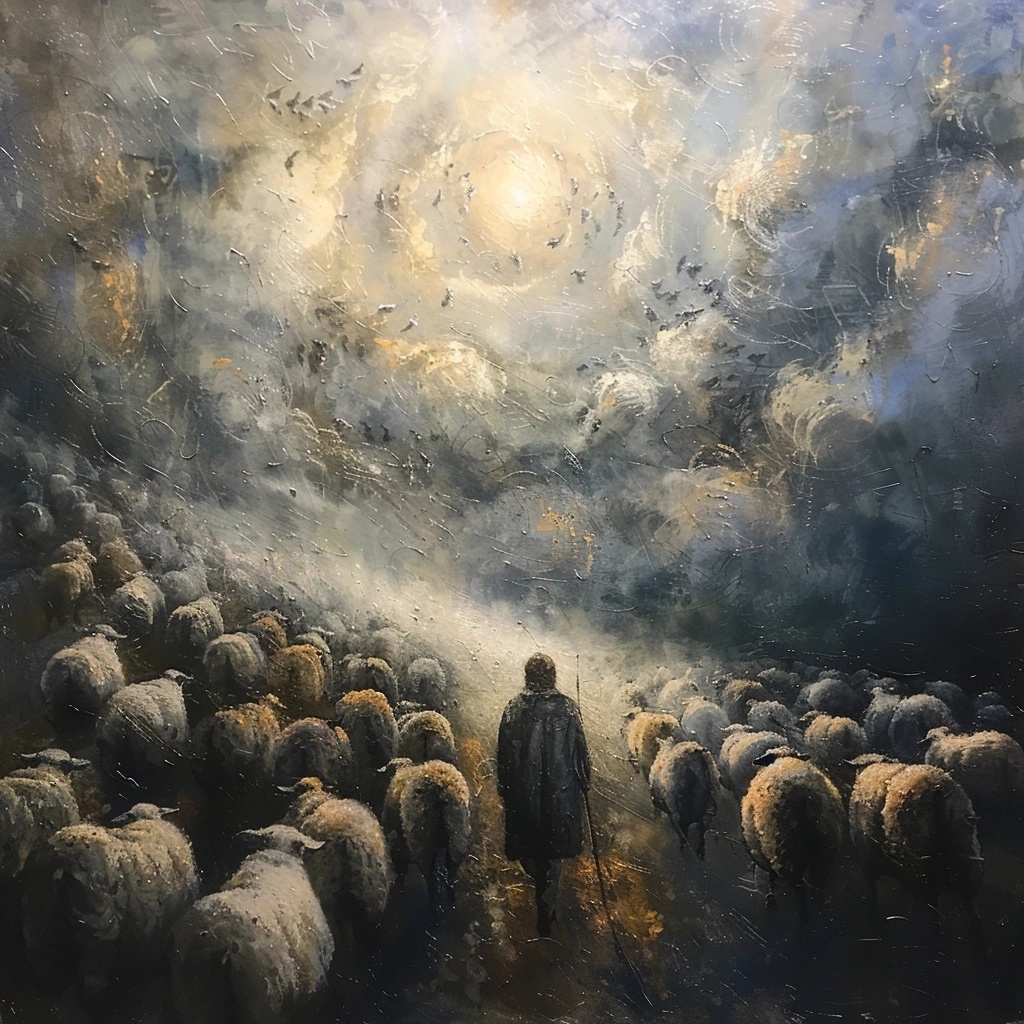
This unidentifiable group who are to make God’s people jealous, are the Gentile Christians who come back to God through Christ, the Messiah. In essence, Christ came to reconcile the lost sheep of the northern house of Israel (the lost 10 tribes), and in so doing, make the southern House of Judah jealous for Him. He knew the south would initially reject Him, and stumble on the cornerstone as was prophesized. The prophet Jeremiah speaks of the House of Israel and the House of Judah as the lost sheep who will reconcile their differences and join together in an everlasting covenant.
4 “In those days and in that time, declares the Lord, the people of Israel and the people of Judah shall come together, weeping as they come, and they shall seek the Lord their God. 5 They shall ask the way to Zion, with faces turned toward it, saying, ‘Come, let us join ourselves to the Lord in an everlasting covenant that will never be forgotten.’
6 “My people have been lost sheep. Their shepherds have led them astray, turning them away on the mountains. From mountain to hill they have gone. They have forgotten their fold.
Jeremiah 50:4-6 ESV
In Matthew, we see Christ state directly what His mission is when He tests a Canannite woman (a gentile/foreigner) to see if she belongs to the House of Israel. She proves herself worthy and is rewarded:
21 And Jesus went away from there and withdrew to the district of Tyre and Sidon. 22 And behold, a Canaanite woman from that region came out and was crying, “Have mercy on me, O Lord, Son of David; my daughter is severely oppressed by a demon.” 23 But he did not answer her a word. And his disciples came and begged him, saying, “Send her away, for she is crying out after us.” 24 He answered, “I was sent only to the lost sheep of the house of Israel.” 25 But she came and knelt before him, saying, “Lord, help me.” 26 And he answered, “It is not right to take the children’s bread and throw it to the dogs.” 27 She said, “Yes, Lord, yet even the dogs eat the crumbs that fall from their masters’ table.” 28 Then Jesus answered her, “O woman, great is your faith! Be it done for you as you desire.” And her daughter was healed instantly
Matthew 15:21-28 ESV
In Luke, we read of Christ’s response to the Pharisees for ministering to tax collectors and sinners. Christ states that among them are His lost sheep.
1Now the tax collectors and sinners were all drawing near to hear him. 2 And the Pharisees and the scribes grumbled, saying, “This man receives sinners and eats with them.”
3 So he told them this parable: 4 “What man of you, having a hundred sheep, if he has lost one of them, does not leave the ninety-nine in the open country, and go after the one that is lost, until he finds it? 5 And when he has found it, he lays it on his shoulders, rejoicing. 6 And when he comes home, he calls together his friends and his neighbors, saying to them, ‘Rejoice with me, for I have found my sheep that was lost.’ 7 Just so, I tell you, there will be more joy in heaven over one sinner who repents than over ninety-nine righteous persons who need no repentance.
8 “Or what woman, having ten silver coins, if she loses one coin, does not light a lamp and sweep the house and seek diligently until she finds it? 9 And when she has found it, she calls together her friends and neighbors, saying, ‘Rejoice with me, for I have found the coin that I had lost.’ 10 Just so, I tell you, there is joy before the angels of God over one sinner who repents.”
Luke 15:1-8 ESV
After describing gentile sinners as lost sheep, Christ then relates to them the parable of the prodigal son, who once shared in an inheritance with his family, but then squandered it and was scattered far away, similar to the northern tribes. The son returns and a great sacrifice is prepared for him, but the son who had been there longer (the southern House of Judah) resented him, while the father is exceedingly joyful. The same analogy is made in the next 2 parables (lost sheep, lost coin), where something is owned, lost, and found again. Again, note that in all three parables, the lost symbol was at one time possessed by the owner (the shepherd previously owned the sheep, the woman previously owned her coins, and the father previously cared for his son). These are not new things found, these are items RETURNING to their proper place of protection.
11 And he said, “There was a man who had two sons. 12 And the younger of them said to his father, ‘Father, give me the share of property that is coming to me.’ And he divided his property between them. 13 Not many days later, the younger son gathered all he had and took a journey into a far country, and there he squandered his property in reckless living. 14 And when he had spent everything, a severe famine arose in that country, and he began to be in need. 15 So he went and hired himself out to one of the citizens of that country, who sent him into his fields to feed pigs. 16 And he was longing to be fed with the pods that the pigs ate, and no one gave him anything. 17 “But when he came to himself, he said, ‘How many of my father’s hired servants have more than enough bread, but I perish here with hunger! 18 I will arise and go to my father, and I will say to him, “Father, I have sinned against heaven and before you. 19 I am no longer worthy to be called your son. Treat me as one of your hired servants.”’ 20 And he arose and came to his father. But while he was still a long way off, his father saw him and felt compassion, and ran and embraced him and kissed him. 21 And the son said to him, ‘Father, I have sinned against heaven and before you. I am no longer worthy to be called your son.’ 22 But the father said to his servants, ‘Bring quickly the best robe, and put it on him, and put a ring on his hand, and shoes on his feet. 23 And bring the fattened calf and kill it, and let us eat and celebrate. 24 For this my son was dead, and is alive again; he was lost, and is found.’ And they began to celebrate. 25 “Now his older son was in the field, and as he came and drew near to the house, he heard music and dancing. 26 And he called one of the servants and asked what these things meant. 27 And he said to him, ‘Your brother has come, and your father has killed the fattened calf, because he has received him back safe and sound.’ 28 But he was angry and refused to go in. His father came out and entreated him, 29 but he answered his father, ‘Look, these many years I have served you, and I never disobeyed your command, yet you never gave me a young goat, that I might celebrate with my friends. 30 But when this son of yours came, who has devoured your property with prostitutes, you killed the fattened calf for him!’ 31 And he said to him, ‘Son, you are always with me, and all that is mine is yours. 32 It was fitting to celebrate and be glad, for this your brother was dead, and is alive; he was lost, and is found.’”
Luke 15:11-32 ESV
The gentiles who come to Christ, and hear His name, are the lost 10 tribes. They are the prodigal son, the lost sheep, and lost coin. They know His voice and were once His. Christ states in John 10:
14 I am the good shepherd. I know my own and my own know me, 15 just as the Father knows me and I know the Father; and I lay down my life for the sheep. 16 And I have other sheep that are not of this fold. I must bring them also, and they will listen to my voice. So there will be one flock, one shepherd. 26 but you do not believe because you are not among my sheep. 27 My sheep hear my voice, and I know them, and they follow me.
John 10:14-16,26-27 ESV
The same is echoed by Peter. Again, the sheep who were once part of the flock, have now RETURNED:
24 He himself bore our sins in his body on the tree, that we might die to sin and live to righteousness. By his wounds you have been healed. 25 For you were straying like sheep, but have now returned to the Shepherd and Overseer of your souls.
1 Peter 2:24-25 ESV
These gentile believers are the return of the northern house in a spiritual sense, and it is the spiritual sense that God esteems. Paul also seems to confirm the identify of Christian gentiles as the northern tribes in Romans 9, where he laments the hardened hearts of his fellow members of the southern tribes: Paul states that these gentiles coming to Christ are the fulfillment of Hosea’s prophecy. So no matter how one interprets Hosea’s prophecy as to the identity of the children, all interpretations point to them being in some respect Israel.
“I am speaking the truth in Christ—I am not lying; my conscience bears me witness in the Holy Spirit— 2 that I have great sorrow and unceasing anguish in my heart. 3 For I could wish that I myself were accursed and cut off from Christ for the sake of my brothers, my kinsmen according to the flesh. 4 They are Israelites, [southern tribes in the flesh] and to them belong the adoption, the glory, the covenants, the giving of the law, the worship, and the promises. 5 To them belong the patriarchs, and from their race, according to the flesh, is the Christ, who is God over all, blessed forever. Amen. 6 But it is not as though the word of God has failed. For not all who are descended from Israel belong to Israel, 7 and not all are children of Abraham because they are his offspring, but “Through Isaac shall your offspring be named.” 8 This means that it is not the children of the flesh who are the children of God, but the children of the promise are counted as offspring.
24 even us whom he has called, not from the Jews only but also from the Gentiles? 25 As indeed he says in Hosea, “Those who were not my people I will call ‘my people,’ and her who was not beloved I will call ‘beloved.’” 26 “And in the very place where it was said to them, ‘You are not my people,’ there they will be called ‘sons of the living God.’”
Romans 9:1-8,24-26 ESV
In verses 24-26, Paul explicitly references Hosea’s prophecy in identifying the gentile Christians as a component of Israel. Again, regardless of interpretation as to the identity of Hosea’s 3rd child (whether it represents the northern or southern House), the prophecy is to Israel, specifically the scattered northern tribes, and we now have Paul’s words confirming it. Paul then references Isaiah 1:9, where Isaiah states that the southern tribe is given mercy and is left as a booth in His vineyard lest the whole vineyard be destroyed as was Sodom and Gomorrah.
29 And as Isaiah predicted, “If the Lord of hosts had not left us offspring, we would have been like Sodom and become like Gomorrah.”
Romans 9:29 ESV
Recalling 1 Pet 2:9-10, we again see confirmation of gentile Christians as those who once received no mercy but through Christ, now received mercy. This is in reference to Hosea’s 2nd child, Lo-Ruhamah, the northern tribes of Israel, described in Hos 1:6. In the passage, Peter also references Deut 32:21 as those who were not a people, which we should distinguish from those are not my people from Hosea 1:9, which references the southern house of Judah. Again, I am distinguishing Not a people from Not my people as distinct from one another, the former referring to the northern tribes, while the latter, the southern tribes (for further discussion, see staggered judgements).
9 But you are a chosen race, a royal priesthood, a holy nation, a people for his own possession, that you may proclaim the excellencies of him who called you out of darkness into his marvelous light. 10 Once you were not a people, but now you are God’s people; once you had not received mercy, but now you have received mercy.
1 Pet 2:9-10 ESV
Here is the scripture referencing Not A People in Deut 32:21:
21 They have moved me to jealousy with that which is not God; they have provoked me to anger with their vanities: and I will move them to jealousy with those which are not a people; I will provoke them to anger with a foolish nation.
Deuteronomy 32:21 KJV
Here is the scripture referencing Not My People in Hosea 1:8-9
8 When she had weaned No Mercy, she conceived and bore a son. 9 And the Lord said, “Call his name Not My People, for you are not my people, and I am not your God.”
Hosea 1:8-9 ESV
Again, I believe these are separate groups prophetically speaking, for the pronomitive suffix assigned to the scripture in Hosea grants that group special character, while the absolute form in Deuteronomy does not. (Again, Lo-Ammi (Not My People) are the identifiable southern tribes of Israel, while Lo-Am (Not A People) are the unidentifiable northern tribes who are utilized to make the south jealous for Him.)
We have established a pattern of Biblical prophecy as describing God’s people, Israel, having two components – the north and the south. Furthermore, we have established that the north represents the scattered 10 northern tribes of Israel, and may represent today’s gathering of lost sheep throughout the Gentile Christian church.
With this in mind, let’s continue now with the history of Israel and the scattering of the 10 tribes from Assyria’s conquest, and what befell the southern tribes through Babylon. Let’s also examine the key figure in God’s two house reconciliation, who is Christ the Messiah, and see how each house is to play their part in His reign through their staggered judgements.
Next Section: The Fall of the North

